Hiển thị các bài đăng có nhãn card game. Hiển thị tất cả bài đăng

Thứ Bảy, 7 tháng 7, 2018

'Anthelion: Conclave of Power' Playtests Open

ButtonShy Games has just launched their playtester network for upcoming wallet games. These are all games using just 18 cards packed in a tiny little vinyl wallet. I've had a couple of wallet games published over the years and I'm very excited to see the next one come to life.

Anthelion: Conclave of Power is based on John DuBois' Avignon: Clash of Popes, a clever 2p strategy game where players push and pull cards in a tense tug-of-war. Anthelion takes that fun gameplay to the stars in ButtonShy's Pocket Universe space opera setting. Your goal is to gain enough star power in your conclave to sway the galaxy.

This playtest pack includes the base game: four Liberator characters, four Dynasty characters, and four Rogue characters. Each has their own abilities, attributes, and resources. We've also included two expansion factions to test: The Androids and the Fuzzies. I'm very eager to see how these play out in blind tests.

» » Sign up for the ButtonShy playtester network to get early peeks at Anthelion and many other upcoming ButtonShy games!


Thứ Hai, 17 tháng 10, 2016

Two New Card Games on Sale!


Hello, all! These are the first two card games I'm self-publishing in over a year and I'm mighty proud of them.

Curse You, Robin Hood! is a rowdy pub-style card game where you're merchants in Sherwood Forest trying to get as rich as possible. The only problem is that if you're the richest in a particular type of good, Robin Hood will steal it all from you. Different legendary characters will also join your game, introducing the basics of bluffing and negotiation to new players without getting in the way of gameplay. I really love the art by Molly Ostertag.

» Buy it here: Curse You, Robin Hood!

» Watch the video tutorial here:


I Can't Even With These Monsters is the first game in the I Can't Even series. In these games, there's one major rule: Only the highest odd-numbered score will win the game. Even if four players have 22, 20, 18, and 3 points respectively, the player with 3 points will win. This edition introduces the basic concepts with seven fun monsters illustrated by Charles Andrew Bates.

Buy it here: I Can't Even With These Monsters

Watch the video tutorial here:

Thứ Tư, 16 tháng 12, 2015

"Curse You, Robin Hood!" seeks playtesters!


I'm happy to say that "Curse You, Robin Hood!" is now ready for public playtesting. In the legendary days of Sherwood forest, the regular Joe merchants trying to earn an honest buck keep getting robbed by Robin Hood. They quickly learn that the trick to getting rich in Sherwood is to just not be the richest merchant, otherwise you're the biggest target for the Merry Men.

Find the complete rules here along with a PnP PDF of the 50 cards. This is the next stage of development of Sharewood, the original light tavern card game a bunch of us playstormed at BGGcon this year. (The story behind that is in this post.)


Curse You Robin, Hood! expands from 1 to 6 players, uses a custom the deck, simplifies scoring, adds shooting the moon and multi-round rules. I'm pretty proud of the solo rules as well, since they're not exclusively limited to one-player games. The bots can be added to a group of any size. It's pretty fun! Hope you get a chance to play!

Have fun!

Thứ Hai, 23 tháng 11, 2015

Sharewood, a game we playstormed at BGGcon


Hello! This post comes to you the day after BGGcon when I'm still bleary-eyed and recovering from a fast-paced four days of pitching and playtesting. It was a wonderful experience and I'm sure lots of folks will have much better documentation of the event than I do.

Instead, I wanted to show you a snapshot of what it was like with such a critical mass of game designers in one place. Emerson Matsuuchi, Chris Rowlands, Adam S., Mark Streed, and I were hanging around the main hall on the last day. I pulled out a deck of cards and openly noodled a few different interactions I've had tumbling around.

In particular, I had idea of being a merchant in Nottingham trying to earn wealth, but not so much that Robin Hood would steal your ill-gotten gains. Sort of the inverse scenario of Sheriff of Nottingham. Here's what we came up with after lots of playstorming and collaboration. I can't claim sole credit for this game, it was definitely a collaboration between all five of us.


Sharewood

In the taverns of Sherwood Forest and Nottingham, the locals play a card game inspired by Robin Hood's legendary bandits who rob from the rich and give to the poor. Players try to earn the most wealth without catching the attention of the thieving Merry Men.

We only tested this with five players, so the rules below assume five players are present. Each round of play lasts about five minutes and we liked to play multiple rounds, tracking our cumulative score.

Setup
We remove one suit and the jokers from a standard poker deck.
We shuffle the remaining cards and deal seven cards to each player's hand.
We set aside any undealt cards out of the game.

Gameplay
We play out a six "days" in Sherwood Forest. (The local merchants take Sunday off.)

Each day, we each choose one card from our hand and put it face-down in the center of the play area. The heart of the game is in negotiating with each other and coming to agreements about which cards we agree to put out into the pot. A common deal would be

"I'm playing a 5 this day. Anyone else playing a 5?"
"I can play a 5, sure. You got a deal."

These negotiations are not binding. We may and probably will be bluffing about half the time. Paying attention to the other negotiations is also important, as the other player's side deals will affect you as well.

Once we all put in our cards, we reveal them. Aces are considered 1, Jack is 11, Queen is 12, and King is 13. Then some mandatory trades will occur, listed below:
  • If two players reveal the same rank, they must trade their cards.
  • If three players reveal the same rank, they must trade clockwise with each other.
  • If no one reveals the same highest rank or lowest rank, then the player who revealed the highest individual rank must trade with the player who revealed the lowest rank. (This is Robin Hood stealing from the rich and giving to the poor.)
  • Everyone else keeps the card they played.
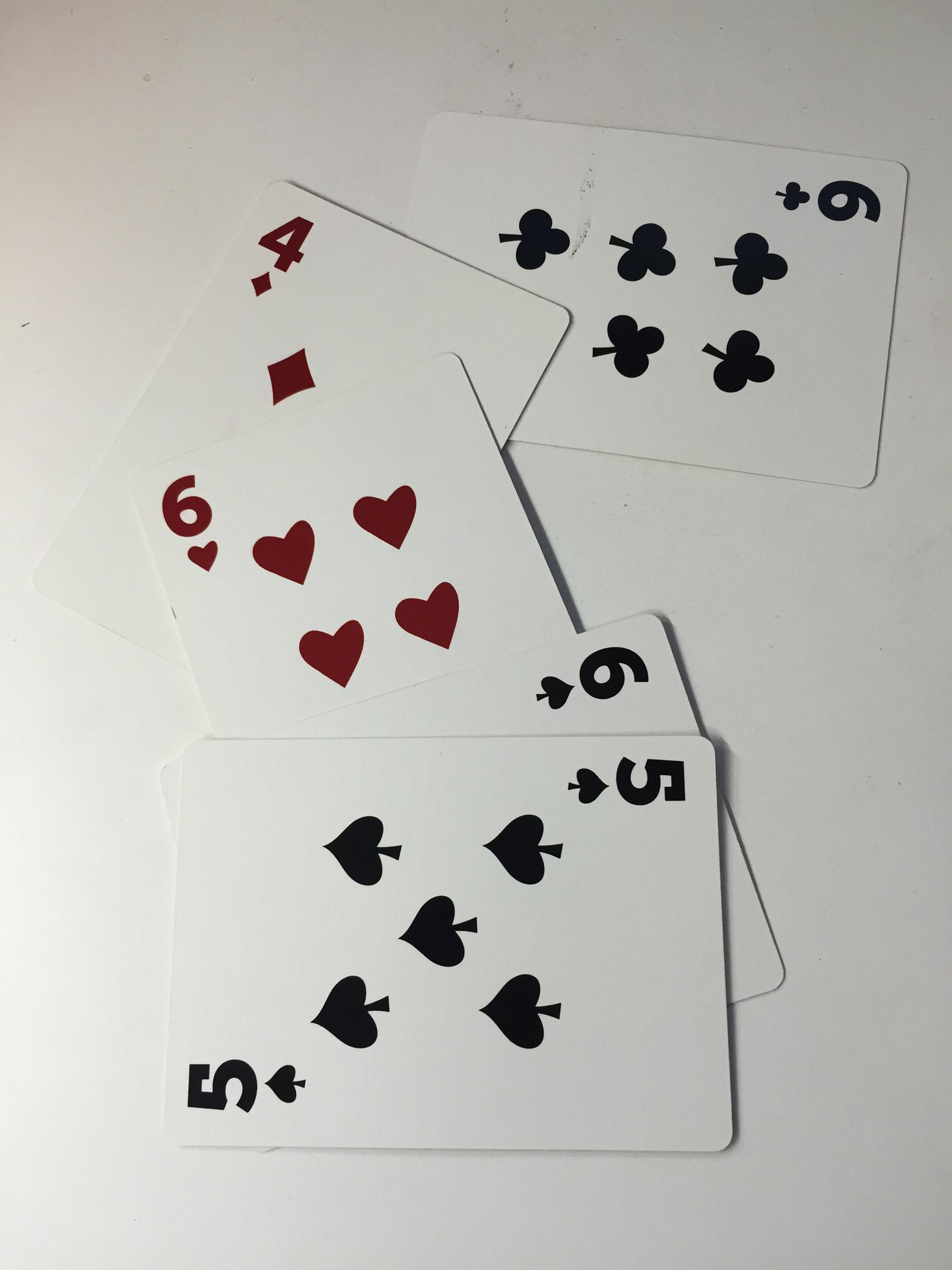
Here are some sample turns:


    Once trades are resolved, the card we received this day goes into our personal stockpile face-up. (In other words, a public tableau.)

    We repeat this process for a total of six days, then we discard the one remaining card from our hand.

    Endgame and Victory
    At the end of the game, Robin Hood strikes one last time. We determine who has the highest sum of all ranks in each suit. If you have the highest sum, then you must discard those cards from your stockpile. If tied, you must both discard those cards from your stockpiles.

    As an optional rule, you may decide if each of your Aces are valued at 1 or 14, thereby giving you a little bit more control of whether you get to keep your cards away from that thieving Hood.

    Your final score is highest ranking card you have in each suit added together.

    Thứ Hai, 26 tháng 10, 2015

    Designing Victory and Loss in Games ("Can we just call this one a win?")


    I'm a member of Game Designers of North Carolina, a local group of tabletop game designers who exchange playtests and insights in the craft of game design. We were playtesting a game where a particular endgame state resulted in a loss for the whole group, as in a co-operative game. Barring that outcome, there would only be one winner at the end of the game as in a traditional competition.

    The tricky thing is that each player individually accumulates their own points so even if the "group loss" state occurs, if I have the most points, the game can't stop me from feeling like I won. This brought up a brief and very useful discussion about the essential social contracts surrounding games when players agree to certain game-states as being desirable and worth pursuing. We discussed simply calling the "group loss" state an "endgame" state, which would fundamentally change everyone's strategies and tactics without changing any of the mechanics.

    It got me thinking of a few other games that fiddle with the semantics of games without doing too many wildly original mechanics.


    Oil Springs of Catan adds a Tragedy of the Commons element to traditional Catan. Oil is an extremely valuable resource, but also strictly limited. One of the endgame states is extracting all of the oil and ruining the environment for everybody, essentially resulting in a group loss. The designers here have already anticipated my earlier concerns. In this case, the player who best managed the environment is the winner, not whoever happens to have the most points at this time.


    There's a similar structure to Fram R'yleh, a new Lovecraftian themed trick-taking card game from Japan. The goal of the game is to collect a bunch of mind-shattering Lovecraftian relics while keeping your sanity. The player with the highest sanity score is the winner... but sanity can go into the negative range in this game. If every player's sanity is in the negative at the end of the game, then the player with the lowest sanity is the winner. You may eke out a victory with only 1 point, or steal victory with abysmally low double-digit negative score.


    There's a game called Why First? which is a simple racing game where only the player in second place in each round scores points and the player with second-most points at the end of a series of races is the winner. This game might have easily been a bland racing game with a traditional victory condition. Instead, dictating that only second placers can carry over their points is a surprisingly challenging and fun concept to plan around.

    ----

    In each of these cases, the semantics of "victory" and "loss" are innovative, but clearly understood and agreed upon by all players. Each has strict guidelines about how "points" are accumulated, who may earn them, how many they may earn, and how they are valued at the end of the game. This isn't necessarily an old idea, as there are many traditional card games where you're trying to avoid taking points, for example.

    For more on questioning game assumptions, check out this post from 2014 inspired by Rob Daviau.

    Do you have any favorite games where "victory" and "loss" are a defined in interesting ways? I'd love to hear about them in the comments!

    Thứ Năm, 22 tháng 10, 2015

    Card At Work: 3 - Planning your Card Design


    Hi folks! I released a new episode of Card at Work this week. This is my ongoing youtube series on graphic design and art direction for cards in tabletop games. This series is supported by patrons like you. Thank you!

    In this episode, I discuss the process of planning your card design using basic Constants and Variables. Constants are the things that won't change from card to card, usually structural elements like positions and sizes of art, icons, and text spaces. Variables are the things that change within those constraints, like the actual images and text content.

    Featured examples include:

    Heir to Europa
    Monsoon Market
    Kodama: the Tree Spirits
    Magic: the Gathering
    Zeppelin Attack!
    Koi Pond
    Arf!
    Solar Senate
    Light Rail


    Support further releases at http://www.patreon.com/danielsolis
    Thank you!

    Thứ Ba, 13 tháng 10, 2015

    Kodama: the Tree Spirits is live on Kickstarter!


    Kodama: the Tree Spirits is now live on Kickstarter! In this game, you and the other players are caretakers of the forest and its inhabitants. You must grow a tree as a new home for Kodama, the tree spirits. Each Kodama has its own preferences, so you'll have to grow carefully and select the right adornments to get it just right!

    I'm so pleased with how much Action Phase Games has put into this project already. Watch the video below for an overview:


    Here's the rulebook or watch the tutorial below for how to play:


    To find out more about how Action Phase and I developed a new game based on Kigi, check out this designer diary on BoardGameGeek.

    And, of course, back the project to get your copy! US shipping is free and it's EU-friendly! Thanks so much for your support! 🌱

    Thứ Hai, 12 tháng 10, 2015

    Cardamom: Perhaps a Silly Idea


    This weekend I tweeted about a product that I'd been mulling over for some time, but I just thought might be too silly to even try. I was feeling restless though, so I just quickly sketched out some cards by hand. I figure, what the heck, it can't hurt to blog about it.

    Cardamom is an expansion for a standard deck of playing cards. It's a separate specialized deck of cards that act as SmashUp-style bases for which players compete by playing standard playing cards. It's a little bit worker-placement and a little bit area control.

    Setup

    • Reveal three bases
    • Place them face-up in the center of the play area with plenty of room between them.
    • Keep the base deck nearby face-down.
    • Shuffle a standard deck of playing cards.
    • Deal 5 cards to each player.
    • Keep the card deck nearby face-down.
    • Keep a large supply of chips or paper money nearby. 


    How to Play
    Players take turns clockwise around the table. Start with the person who last had cardamom.

    On your turn, play a card from your hand beside one of the bases. Orient the card so it is clear that you were the one who played it. Unless otherwise noted, you may not play more than one card to a base nor may you place a card on any other player's position around the base.

    When you play a card, you may do the action noted on that base. This is optional.

    You do NOT draw up to five cards at the end of your turn.

    Turns continue until all visible spaces around all the bases have been filled. This ends the round.

    Winning Bases
    At the end of the round, each base says who will be granted a reward as determined by certain conditions.

    New Bases
    At the start of a new round, reveal three new bases.

    Victory
    After the base deck runs out, play out the remaining base(s) as a final round. After the final round, whoever has the most money is the winner.

    Example Bases

    Playing to this base lets you draw a card. At the end of round, 3♠️ earns $2. K♣️ earns $3. ♥️ and ♦️ earn nothing.

    Not all rewards are good! Playing to this base earns $1, but at end of round, 10❤️ loses $2.

    Some bases don't offer rewards, but offer useful actions like moving cards to other bases.

    Here's an odd base: Play 2 cards to it. Highest total numerical rank gets $5. Any pair of matching suit/rank gets $2.


    Conclusion
    I call this "Cardamom" mainly for the "card" pun, but I could easily design this to look like some classic tea package designs with some lovely vintage spice illustrations. There might be spices on each base and whoever collects sets of bases with certain spice blends can score extra points at the end of the game. What do you think? Is this a silly idea?

    Thứ Tư, 8 tháng 7, 2015

    Sketching a 3x3 Tactical Tug-of-War microgame


    This summer I'm trying to get into the habit of running 5k each weekday morning, then sketching some ideas over breakfast. The running is the easy part to keep up, but the sketching has been a little more difficult. But today I've got a little notion that popped while I was stewing over Battleline, Pixel Tactics, and Gwent.

    I'm imagining this as an 18-card microgame with a pick-and-pass drafting setup. With only 18 cards for two players, I think it would be easy to memorize each card, thus making "advanced" play much more accessible to newcomers.

    There are three ropes, represented by three columns with a flag at the center of each. The goal is to win at least two out of three flags. Each player has their own 3x3 field in which to play one card per space. Each player simultaneously chooses the space into which they will play by placing a card face-down in that space. Then each player simultaneously reveals their card. Whoever has the highest total strength in a column at the end of the game will win that column's flag.

    A standard unit has a strength noted on the top left and a suit on the top right. When you play cards to the field, they're always oriented so these stats are on the top of the card from your perspective. Many units also have adjacency bonuses. In this case, this guy gives +1 to the unit on his left, +4 to the unit to the right, and +2 to the unit behind.

    This Ogre's strength is based on how many Hearts are in this same column. It has a heart itself, so it's at least worth 2 strength to start.

    This wizard gives a +3 bonus to the two cards ahead of him. Note that if he is placed in the middle or front row, he'd actually be giving this bonus to enemy units.

    Though there are only three columns, I wonder about allowing players to play along the periphery. The strength of that outside unit wouldn't contribute to winning a flag, but its adjacency bonus may still be valuable for the row or column. Perhaps it's a cheering crowd?

    Anyhoo, that's all I had over breakfast. Maybe it'll turn into something cool?

    Thứ Năm, 14 tháng 5, 2015

    Carden ♥️♣️♦️♠️ A Card-Covering Puzzle Game?


    It's been a while since I explored the simple physicality of cards as a play component. The success of Kigi's overlapping mechanic got me thinking about it again. I wanted to make another game that used a similar mechanic, but in a different way.

    At the same time, I've always wanted to come up with some puzzle "system" that could be iterated over and over again for new puzzles. I'm thinking of things like Sudoku or Masyu. I've been playing a lot of La Boca and I liked the idea of a real-time team puzzle game that expanded to a large group. I thought I could use overlapping cards as the puzzle component somehow.

    Whenever I work on a new game idea, I immediately dig into my longbox of assorted playing cards. I have about 300 standard playing cards from various cheap decks that I use to cobble together my alpha prototypes. So I just grabbed five different cards and started overlapping them, seeing what I could piece together as a game mechanic.

    Here's what I came up with:

    Carden
    The premise is that you're planning a garden, based on specific requirements from your client. For now, you can play with a standard deck of playing cards, but I imagine this final game would use a customized deck of cards. The goal of each puzzle is to arrange a pile of cards so that only a certain number of icons are visible. (Yes, that includes icons along the corners.)

    A puzzle is presented in this format
    27: 5♥️ 6♣️ 2♦️ 8♠️ 1♠️

    The bold number before the colon is the minimum total ranks that may be used in the solved puzzle (so you can't just grab the five of hearts, six of spades, etc.). The number before each suit is how many of those icons may be visible in the solved puzzle. It's assumed that you may only use one card of a suit in the puzzle, unless a suit appears twice. In this case, the puzzle requires two Spades cards. On one card, 8 spades should be visible while only one should be visible on the other.

    Here's the solution to that Jason Paterson came up with this morning:


    As an actual game, I may borrow the scoring mechanic from La Boca for now. Each player is paired with another player to jointly solve the same puzzle from the communal supply of cards. The faster they solve it, the more points they earn. Whoever has the most points wins.

    I'm sure playtests will find that I have to adjust the scale of time and point values. For example, if you hit the exact required number of ranks, then you may get double points. Other variations might be something like this:

    27: 5♥️♥️ 6♣️ 2♦️ 8♠️♠️

    In this case, you must simply have two heart cards and two spades cards, but there is no restriction on how many icons must be visible on the individual cards. (Well, perhaps I'll impose a "1" minimum.)

    I'll whip up some more puzzles for a testing in coming weeks to see if it's really something worth pursuing.

    Thứ Ba, 12 tháng 5, 2015

    Heir to Europa - Now on DriveThruCards!


    People of Earth! I just released a new game called HEIR TO EUROPA. Get it here: http://www.drivethrucards.com/product/148042/Heir-to-Europa

    It's an exciting new card game with set in a new universe of psychic intrigue and shadowy manipulation. Designer +Nick Ferris combines traditional trick-taking games with some innovative new tactics and subtle strategies. It features eye-catching new art by Marisha Lozada, which you can see above.

    Check out more product shots below:


    This is my first game from a designer other than myself! It's exciting new ground for me and my publishing model, so I hope you dig it. We're all very proud of how it all turned out. I hope you enjoy it! Once more, you can get your copy here: http://www.drivethrucards.com/product/148042/Heir-to-Europa

    Thứ Năm, 19 tháng 3, 2015

    Brainstorming a Legacy-Style Trick-Taking Card Game


    I've long felt that the persistence mechanics from Risk: Legacy would translate well to a card game and be a natural fit for the print-on-demand market. (Check out this old post from 2012 breaking down my early thoughts on what it takes to "legacy" an existing game.) I just couldn't figure out a good theme for the game.

    Well, this morning I had a quick brainstorm over twitter with Quinn Murphy, and he really unlocked a juicy premise: The theme is a generational family drama, like Downton Abbey. The fallout from each game represents the shifting fortunes and relationships between each of the characters.

    Let's assume you could add legacy mechanics to a trick-taking game. Each card has potential relationships with any other card in the deck, waiting to be filled in after several games. In time, you'd have a complex web of relationships between any two cards. For example:

    Indebted to...
    This card cannot win a trick if ____ is also in play.

    Married to...
    If ____ is also in play and either wins the trick, split it evenly between both players. (Discard any remainder.)

    Secretly loves...
    If ___ is also in play and you win a trick, give your winnings to that player.
    Rival to...
    If ___ is also in play, neither card may win the trick.

    Business partners with...
    If you possess this card and ___ at the end of the round, earn (insert bonus points of some kind here).

    Employed by...
    If you possess ____ and play this card, choose a card already played during this trick and return it to the player's hand.

    Best friends with...
    If ____ is in play or possessed by another player, add it to your collected cards.

    That's all just a very fast brainstorm. Any relationship mechanics come to mind for you?

    Thứ Ba, 17 tháng 3, 2015

    Seeking Playtesters for Trickster Fantasy


    Howdy folks! I'm happy to announce an open playtest period for Trickster: Fantasy, the first in a series of light card games, featuring new art and mechanical twists in each deck theme. You saw an early draft of this game last week, but after some rapid iteration it's ready for public playtests!

    This game is suitable for big group gatherings where you want an "icebreaker" that gets everyone to the table for a few minutes. I want to make sure the core game is 100% solid before adding the "fantasy" twists, which is where you come in! Check out the link below and share your thoughts!

    --> Download the PDF here