Hiển thị các bài đăng có nhãn graphic design. Hiển thị tất cả bài đăng

Thứ Tư, 14 tháng 9, 2016

Wireframe Card Designs for Patrons


New goodies for all my patrons! I had a request for some wireframe card designs for different types of games, so here's a test batch for you. These are available in EPS, JPG and an IDML file. Hope you find these useful! If you'd like to see more, please comment on the Patreon post here. Thanks!

Thứ Ba, 28 tháng 6, 2016

Card at Work: 11 - Inserting Optional Line Breaks with DataMerge


It's a new episode of Card at Work, the video series covering the basics of designing cards for tabletop games!


This time we're building on the GREP tricks from the last episode on inline icons and using similar technique to insert optional line breaks within a single cell of a spreadsheet. Using this method, you can drop a line break into a single block of text without needing a manual line break in the InDesign template itself OR using a find-replace after merging the document.

This is my first Card at Work episode in HD resolution. I'm slowly figuring out Adobe Premiere so hopefully these episodes will be even higher quality as time goes on.

P.S. I'll be streaming today live at around noon EST. I'll be working on a new round of layout updates for Chimera Station from Tasty Minstrel Games at http://www.twitch.tv/danielsolis81.

Support more videos at my Patreon!

Thứ Hai, 30 tháng 5, 2016

Logo Design Time Lapse Video – Catty B's


Here's a new time-lapse video of a recent logo design for Catty B's, a comedy series from Angela Webber and Lucia Fasano. They were very kind and generous to let me record and share this design process.

Patrons $10+ also get a version of this video with commentary about how I designed this logo and some of the decision process. Hope you all find that useful!

Thanks to Angela, Lucia, and all my patrons for making these videos possible!

Thứ Sáu, 13 tháng 5, 2016

Making Art Direction More Inclusive


When I get the wonderful opportunity to art direct for new characters, it's like opening a big awesome toy box. I have to remind myself of some things so I approach this job responsibly. This isn't necessarily a "tips" list, or in any order of priority, it's just what I try to keep in mind. Hopefully it's something you might find useful, too.

An inclusive mindset is a crank, not a switch.
It isn't a one-time flip from ignorance to enlightenment. It's an ongoing process of checking self, looking back on mistakes, and making assertive efforts to do better. I've never been and never will be 100% "woke," but I must keep trying to "wake up." I will make (and have made) mistakes, but that isn't an excuse to stop putting in the effort to be more inclusive. This has real practical impact when I'm working on a project as an art director. As an art director, I have so much freedom to guide artists in certain directions that it's an awful missed opportunity if I don't at least try to push.

» For more, see the Parable of the Polygons.

Question the "default."
You know how Earth is moving around the sun and the sun is moving through the galaxy, but we don't recognize it because we are born into it? That's sort of like the "Default." My beliefs, body, culture, class, or anything else is not the "default." The "default" is just the motion we're born into and assume is the standard forever. In truth, the "default" is the inertia of history, family, and culture. If I stop putting in effort, just trying to remain "neutral," I turn into debris floating along with that inertia, harming people in my path who can't go along with that inertia. It takes ongoing effort just to keep myself standing still, holding what little progress I've made in improving myself. It takes even more effort to actually move against that inertia, to change what is considered "default."

» For more, see the Medieval POC Tumblr.

Accept responsibility.
Sometimes I see questionable art direction justified by "It's what the market wants" or "It's historically accurate." Even granting that, which I do NOT necessarily, it is still an art director and creator's choices that rule the day. A fictional character doesn't have an ethnicity, gender, body, or pose by accident. It's a creator's choice to present a character a certain way. Even in video games with character customization, the creators set the options available. If an option is available, that's a choice. If it isn't available, that's a choice, too. Deferring and defaulting is a choice; one that I'm trying not to make whenever possible.

» For more, see the recent Extra Credits video on character design.

Know the roles and their history.
I have to ask myself who I'm casting as a villain, a hero, the sidekick, the comic relief, the sage mentor, and all of the other standard tropes. Each of those roles has a real-world history behind it, with many examples of under-representation or ugly caricature. If I'm casting a straight white able-bodied man as the "hero," each one of those attributes is the path of least resistance. I must at least try to counter the history of under-representation or over-representation in certain roles. Does that hero have to be a white man? Are you really going to make another albino villain? If there is only one person of color in a cast, can there be two? If there are already two, can there be four? Half the cast? Most of the cast? Whether my client will go along with me, I must at least try to be the annoying force pushing for more inclusion.

» For more on race tropes to be aware of, check out TVtropes.

Character design has gameplay value.
When I cast the characters for Belle of the Ball, illustrated by Jacqui Davis, I knew they'd be divided into various sub-groups which would represent individual counties and factions. It greatly eased gameplay if each sub-group shared certain characteristics like color scheme, occupation, wardrobe, and ethnicity. It would really help gameplay if the characters who shared some game mechanical traits also looked similar to one another, so they could be recognized across a table, upside-down. In the effort to build those visual similarities, I tried to make sure there was a broad spectrum of ethnicity, age, body types, and gender expression. It wasn't just "pandering," there was real gameplay value in organizing the character design this way. Now I'm working on another game where there aren't really any factions as such. Each character is a unique individual and must all be easily distinguished from each other. Towards that end, I'm being much more assertive in seeking unique intersections of these attributes.

» For more, see Subjective Guess Who, an effort to fix the classic game.

Randomization is a start, not an end.
If I'm casting 60 characters, I’ll try to make a bunch of different lists of various attributes like ethnicity, age, gender expression, and so on. Then I randomize all of these variables for the entire cast, thereby (hopefully) breaking any of my own biases about what a "Fighter" should look like. Even with those tools, I have to remember not to defer responsibility. I can’t lean back and say  "The machine made all the men white. Not my fault! Sorry you're offended!" I must check each outcome and see if it falls in line with the “default.” If so, I give it a really strong skeptical look and decide if I need to swap out or replace some attributes. Generally these changes are towards more diverse intersections. If one intersection is over-represented, I’ll try to change those to push for more even distributions.

» For more, see the RandomizeList tool to randomize your own lists.

Art direction is still my own choices, I have to check it against history and be conscious of the inertia at work in my biases. What do you think? Am I missing something huge here? Is there anything you remind yourself of when you're doing art direction? Share your thoughts in the comments. :)

Thứ Hai, 7 tháng 3, 2016

Resizing a Hardcover Design [Patreon Sample]


Hello All!

Aside from my Card at Work videos available for the general public, I've been recording more of my real-world process as I work through various design problems with actual projects.  This time the session was short enough and the project simple enough that I thought it would be a good example of a typical recording:

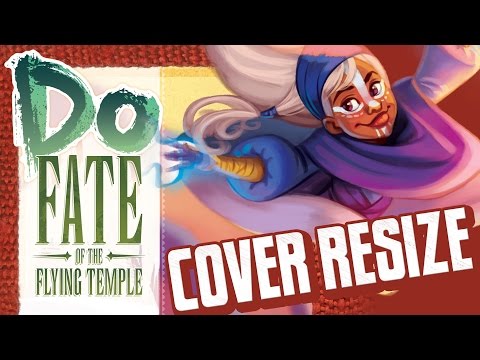
In this session, I had to resize the cover of Do: Fate of the Flying Temple to new hardcover specs. However, the current dimensions were waaay different than the new dimensions provided by the printer. This video covers a few different photoshop techniques to make the resize as seamless as possible without losing any resolution.

- Layer Effects
- Gradient Layer Masks
- Layer Groups with Layer Effects

That's just this session. The other videos go into more detail about advanced InDesign techniques for even more real-world projects.  The entire archive of real-time sessions are available to all $10+ patrons.

I hope you find them useful! Please share freely! Thanks so much!

Thứ Ba, 2 tháng 2, 2016

Watch: How to Automatically Highlight Keywords in Game Text [InDesign DataMerge]


A couple days ago Matthew G. asked me how to use InDesign to automatically highlight certain text without having to manually do it. He was generous enough to let me record my demonstration of two methods I've practiced over the years.

Check out the video above for details! Hope it helps!

Thứ Năm, 28 tháng 1, 2016

Watch: Rulebook layout for the Great Dinosaur Rush


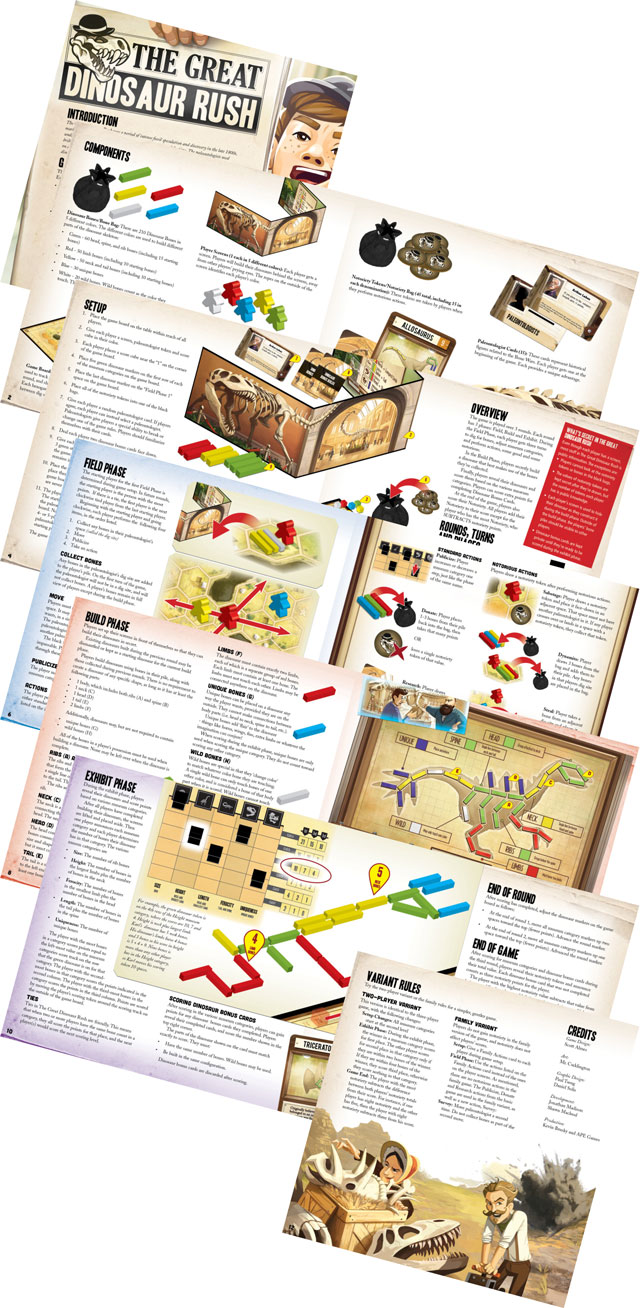
I just wrapped up the rulebook layout for The Great Dinosaur Rush, by Scott Almes and APE Games. Kevin Brusky at APE Games was generous enough to let me stream the layout process on Twitch. Now that it's complete, I made a sped up video overview covering the bulk of that whole process. There are still small tweaks to be made to a few words here and there, but the layout is pretty much settled down. Hope you enjoy this peek behind the curtain!

Thứ Năm, 22 tháng 10, 2015

Card At Work: 3 - Planning your Card Design


Hi folks! I released a new episode of Card at Work this week. This is my ongoing youtube series on graphic design and art direction for cards in tabletop games. This series is supported by patrons like you. Thank you!

In this episode, I discuss the process of planning your card design using basic Constants and Variables. Constants are the things that won't change from card to card, usually structural elements like positions and sizes of art, icons, and text spaces. Variables are the things that change within those constraints, like the actual images and text content.

Featured examples include:

Heir to Europa
Monsoon Market
Kodama: the Tree Spirits
Magic: the Gathering
Zeppelin Attack!
Koi Pond
Arf!
Solar Senate
Light Rail


Support further releases at http://www.patreon.com/danielsolis
Thank you!

Thứ Hai, 29 tháng 6, 2015

ENnie Award Medal Design

The ENnie Award nominees and judge spotlights were announced today, which is why I can finally reveal to you the medal design I did! A few months ago, Campaign Coins came to me with the opportunity to design the medal to be used in the ENnie Awards for the next five years. It had to be an evergreen design that still highlighted the awards' roots in RPGs. I hope you dig it!

Thứ Hai, 27 tháng 4, 2015

Score Tracker Layout: Snake vs. Graph

(Source: BGG, James Clarke's fan-made Seasons score board.)

Just a general FYI for score tracker layout. Generally score trackers fall into two groups.

"Snake" score tracks follow a serpentine S-shaped path. The "Snake" is best to represent a step-by-step journey, often for games with small increments of scoring happening somewhat frequently. If you use a snake, make sure it's clear that you have a path to follow. You don't want to arrange the spaces in a grid, which implies the Graph layout below.

"Graph" score tracks that are arranged in a grid, with rows of ten spaces each. If you use a graph, you'll gain a lot of fans among engineers and mathematicians. This is much more abstract, but can be extremely useful for jumping double-digit increments at a time, especially in endgame scoring with lots of bookkeeping.

(Edit: For more, Geoff Engelstein covered some of this on Dice Tower Episode 398 at 7:15.)

And as always, make sure each space is numbered. Not just the 5s and 10s. Hope that helps with your tabletop graphic design!

Thứ Ba, 7 tháng 4, 2015

Tabletop Day Coin Design


The kind folks at Campaign Coins asked me a few months ago to design a special commemorative coin for Tabletop Day. You can see the meeple-licious results above. You can find this commemorative coin in three colors, Copper, Silver, and Gold, but only in the promotional Tabletop Day kit at your local Tabletop Day event this Saturday April 11!

Thứ Hai, 6 tháng 4, 2015

Trickster Card Back


My plan for the Trickster line is to have the same seven suits across the entire line. When new decks are released, I just put out seven new characters arrayed across those universal suits, so you can combine characters from different genres and IPs.

That means I need a universal card back that would remain evergreen across the whole line. I didn't want to get stuck in the "Deckmaster" situation, where the card back has obsolete branding elements locked in perpetuity. I decided to follow the example of Pairs, and lift elements from classic card backs.

I just whipped the above card back up over the weekend, pulled together from a bunch of stock Victorian floral patterns and vintage labels. It feels a bit slapdash, with some odd gaps and tangents floating around, but it's sufficient for a prototype.